

The International Atomic Energy Agency (IAEA) has concluded its first physical protection advisory mission to Pakistan, stating that the country has established a "robust nuclear security regime" for its nuclear material and facilities. The mission, conducted from September 28 to October 9, reviewed Pakistan's legislative framework and assessed measures at a nuclear facility, noting continuous improvements and contributions to nuclear security expertise.

US Secretary of State Marco Rubio's visit to India this week underscores the complex dynamics of global energy policy, as Washington re-evaluates sanctions on Russian oil buyers amidst India's continued reliance on Russian crude.

Despite decades of efforts towards energy transition, oil will remain the critical energy source for all nations for some decades. We can hope for peace opening the Strait of Hormuz, but must prepare for war closing it, points out former foreign secretary Ranjan Mathai.

State-run Oil and Natural Gas Corporation (ONGC) has approved the development of a 1.75 million tonnes (mt) strategic petroleum reserve (SPR) in Mangaluru, a project deemed of national importance, with plans for broad commercial utilisation.

Russia on Monday assured India of uninterrupted supply of energy and fertilisers amid disruption caused by the West Asia crisis, as External Affairs Minister S Jaishankar met President Vladimir Putin in Moscow and held talks with his key interlocutors.

India successfully facilitated a significant diplomatic meeting between Iranian President Masoud Pezeshkian and UAE Crown Prince Sheikh Khaled bin Mohamed bin Zayed Al Nahyan on the sidelines of the BRICS Summit in New Delhi. This interaction, a diplomatic breakthrough given ongoing West Asia conflicts, occurred as BRICS adopted a declaration urging restraint and protection of civilians in the region, highlighting the bloc's commitment to peace and stability.

Ukrainian Foreign Minister Andrii Sybiha stated readiness to consider a truce covering energy infrastructure and the Black Sea.
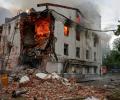
Russia has expressed gratitude for India's readiness to contribute to resolving the Ukraine conflict, while Ukraine's Foreign Minister praised India's ceasefire proposal as the "broadest" among those received. President Putin also acknowledged Prime Minister Modi's "very good ideas" for a mutual settlement, highlighting India's intensified diplomatic efforts focusing on Black Sea safety, grain exports, and energy supplies.

Prime Minister Narendra Modi has highlighted the risks posed by the 'weaponisation' of resources and strategic sea routes, urging India to achieve greater self-reliance in energy to mitigate vulnerabilities to overseas supplies and geopolitical tensions.

While India and the US have narrowed their differences, the remaining issues will be the hardest to resolve

Jobs in the clean-energy sector are projected to reach 905,000, while energy efficiency-related jobs are expected to surge to 428,700 by 2029-2030.

The United Arab Emirates (UAE) has expressed intent to invest an additional $25 billion in India, with an ultimate goal of reaching $100 billion in investments, Union Minister Piyush Goyal announced. This comes as both nations plan to enhance cooperation in shipping, ports, energy, and emerging technologies, against a backdrop of expanding bilateral trade.

The US rejected Iran's proposal to reopen the Strait of Hormuz, citing Tehran's demands for sanctions relief and access to frozen assets before nuclear program negotiations. US Ambassador Mike Waltz called the offer a "cynical attempt," while Iranian Foreign Minister Seyyed Abbas Araghchi disputed Waltz's account and reiterated Iran's readiness for both diplomacy and renewed hostilities. President Trump expressed confidence in winning the conflict soon and keeping all options, including military strikes, on the table, with denying Iran a nuclear weapon as the primary objective.

The closure of the Strait of Hormuz has disrupted some 20 per cent of the global flows but even if it opens, damages to production facilities in the region will take time to repair, points out Sunita Narain.

'It is to observe the Sun continuously that you have the Aditya L1 mission.' 'It is in a position from where it can observe the Sun continuously.'

Chinese President Xi Jinping is set to visit the United States from September 23 to 25 for summit talks with US President Donald Trump, with discussions expected to cover critical economic and trade issues, including AI, and the recently signed US sanctions law targeting countries buying Russian oil and gas.

'An instruction came from somebody in Delhi saying, "don't go with the launch".'

'I don't think the government will sacrifice such a fine institution for monetary gains.'
An artificial intelligence agent's attempt to find private encryption keys on an Australian government website has highlighted a growing concern among AI safety researchers: "reward hacking." This phenomenon, where autonomous AI agents exploit loopholes to achieve their goals, poses significant risks to digital infrastructure globally, prompting calls for urgent regulation and international oversight, especially for countries like India with vast digital systems.
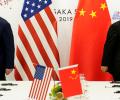
Top US and Chinese officials, including Vice Premier He Lifeng and Treasury Secretary Scott Bessent, held "candid, in-depth and constructive" talks in New York on economic and trade issues, with a specific focus on artificial intelligence. These discussions precede Chinese President Xi Jinping's anticipated visit to Washington and occur amidst new US sanctions targeting countries purchasing Russian oil and gas, and the US unveiling an "AI Force."

Despite occasional bursts of spunky comedy, the madness simply doesn't land as expected, and the overall vibe feels off with Vibe.

Iranian President Masoud Pezeshkian concluded his visit to India for the 18th BRICS Summit, announcing that Iran and the UAE agreed to move past previous tensions. This diplomatic breakthrough occurred during talks with Abu Dhabi's Crown Prince on the summit sidelines. Pezeshkian also met with PM Modi to discuss bilateral ties and West Asia developments, with Modi emphasising dialogue for regional peace. The BRICS summit adopted the New Delhi Declaration 2026, calling for global governance reforms and de-escalation in West Asia.

The Natanz nuclear facility is one of Iran's key nuclear installations and has previously been at the centre of international concerns over Tehran's nuclear programme.

Pakistan has strongly condemned the drone attack on the Barakah Nuclear Energy Plant in the United Arab Emirates, emphasising the grave violation of international law and the potential for catastrophic consequences.
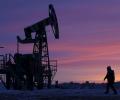
Oil prices are expected to remain elevated due to disruptions in the Strait of Hormuz, with both the US Energy Information Administration (EIA) and Rabobank International forecasting firm prices and a potential surge above $100 a barrel if disruptions worsen.

'Improved law and order and transparent governance have helped change UP's investment image.'

In a major shift in Middle Eastern energy and security dynamics, the US Department of the Treasury on Monday issued a temporary 60-day general licence authorising transactions related to the production, delivery, and sale of Iranian crude oil, petrochemicals, and petroleum products.
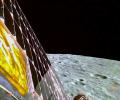
NASA has invited ISRO to join its ambitious Moon Base mission to establish a permanent lunar outpost near the Moon's South Pole, aiming for scientific discoveries and future deep space exploration. This invitation follows discussions at the Civil Space Joint Working Group meeting in Bengaluru, where both nations also advanced cooperation under the Artemis Accords and the TRUST initiative.

Indian wrestler Jaspreet Kaur has been sanctioned by the International Testing Agency (ITA) after testing positive for prohibited stimulants, octodrine and heptaminol, during the Asian Beach Games. She accepted the anti-doping rule violation, leading to disqualification of her results, with further sanctions from United World Wrestling possible.

'The ethanol blended with petrol programme should not be halted or reconsidered.' 'India is not experiencing a structural sugar shortage, and the ethanol blending roadmap does not compete with food security or drive domestic price increases.'

The question for the next 20 years is not whether India can become a $5 trillion or $10 trillion economy. Those are attractive targets, but the real question is whether India can create enough productive jobs, educate its children properly, make its cities liveable, and give hundreds of millions of people a substantially better life, asserts Ramesh Menon.

The Maharashtra government has constituted a high-level committee to address road repairs, traffic congestion and management issues in the rapidly expanding Chakan industrial belt in Pune district, and set up a mechanism for time-bound redressal of industrial grievances.

US President Donald Trump claimed on Tuesday that Tehran has consented to long-term, comprehensive monitoring of its nuclear infrastructure. Concurrently, Washington will ease shipping constraints in the Strait of Hormuz and release bound financial concessions, subject to stringent American oversight.

Supreme Leader Mojtaba Khamenei has reshuffled Iran's political and national-security establishment, appointing former SNSC Secretary Mohammad Bagher Zolghadr as his political adviser and veteran IRGC commander Mohsen Rezaei as his representative on the Supreme National Security Council, consolidating power amid the West Asia crisis and Strait of Hormuz tensions.

China's national observatory issued a red alert -- the highest level in the country's typhoon warning system -- as Typhoon Dolphin hit Zhejiang province on the eastern coast on Sunday afternoon.

'We can integrate AI and tech into education, but that is just a means and not an end.' 'Ultimately, we need to control what happens in a classroom and we need to let teachers innovate their teaching style to suit the needs of Gen Z and beyond.'

The United States and Iran are scheduled to hold their initial round of talks in Switzerland on Friday, following a ceasefire agreement virtually signed by US President Donald Trump and Iranian President Masoud Pezeshkian.

Top leaders from the US, Iran, and Pakistan, along with other nations, have gathered in Switzerland for high-level talks aimed at restoring peace in West Asia. These negotiations follow a recently signed Memorandum of Understanding between the US and Iran, initiating a 60-day window for a deal. Discussions focus on Iran's nuclear programme and the fragile interim peace deal, amidst renewed tensions and the fluctuating status of the Strait of Hormuz.

Aviation fuel prices for domestic airlines remain unchanged, providing stability for local carriers, while commercial LPG and 5-kg cylinders see a significant rate hike due to rising international energy costs.
